
From the Amazon rainforest and Andean volcanoes to the extraordinary wildlife of the Galapagos Islands, Ecuador manages to pack an astonishing amount into one family adventure. Here’s our first-hand guide on how to plan a trip that works for everyone, from energetic younger children to grandparents who’d rather take things at a gentler pace.
1. Why Ecuador & the Galapagos work so well for families
Few family holiday destinations offer quite so much contrast. One day you could be buying a colourful poncho in a traditional Andean market, the next exploring the Amazon rainforest in a dugout canoe, and a few days later watching sea lions play in the biodiverse waters of the Galapagos.
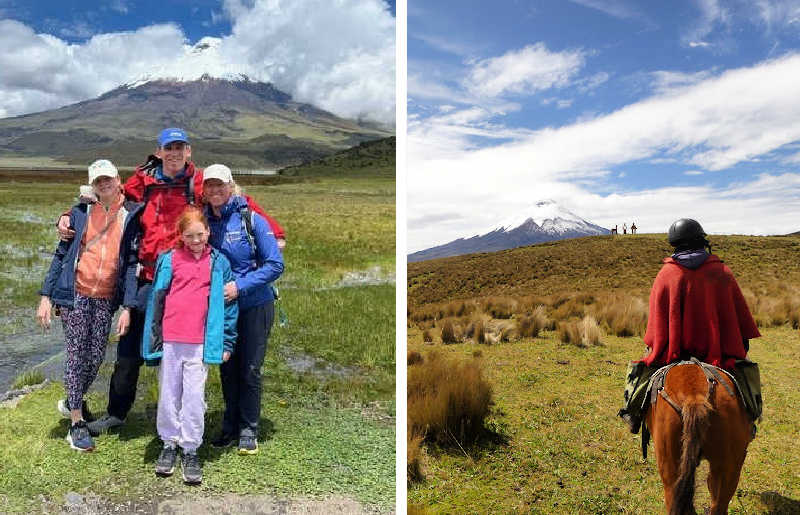
Hiking or riding on the lower slopes of Cotopaxi Volcano is a customer favourite
Having explored Ecuador with our own families, our Stubborn Mule team knows first-hand how magical it is. What makes it so special isn’t just the wildlife or the scenery, but the incredible range of experiences you share together.
It’s also a trip that requires smart planning. Altitude pacing, internal flight connections, boat journeys, and the fixed island entry fees all need to be factored in. Get the balance right, though, and you’ll enjoy a holiday that feels like several bucket-list trips rolled into one.
“Ecuador was incredible! The diversity of the country is truly breathtaking, with Páramo, cloud forests, volcanoes, and the Galapagos!” McCarthy Family (travelling with a 17-year old)
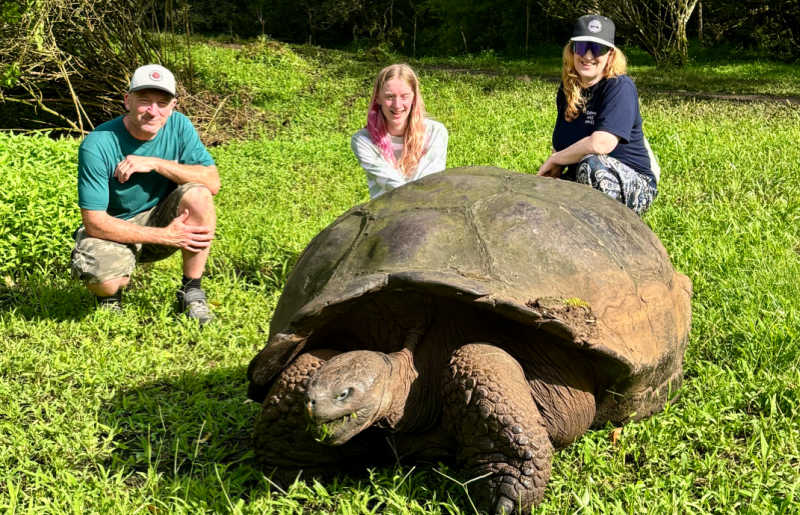
My colleagues Kelly and family meeting the renowned Galapagos tortoises on Santa Cruz Island
2. Ecuador & the Galapagos at a glance
- Best for: Families who love wildlife, outdoor adventures, dramatic scenery and discovering different cultures
- Allow: Around two weeks for a mainland Ecuador and Galapagos combination, with longer if you’d like a more relaxed pace
- The big decision: A Galapagos cruise, a land-based island-hopping trip, or a combination of the two
- What to plan for: High-altitude pacing on the mainland, additional internal flights, time at sea, and fixed island entry fees
- Is food expensive? Mainland Ecuador is very budget-friendly for family meals, though dining out on the Galapagos Islands is pricier due to imported goods (most cruises and eco-lodges include full board)
- When to go: The Galapagos is a year-round destination, although weather and wildlife activity vary by season
For inspiration before you start planning, take a look at our companion feature, Ecuador & Galapagos Top 10, which highlights experiences our families have loved.
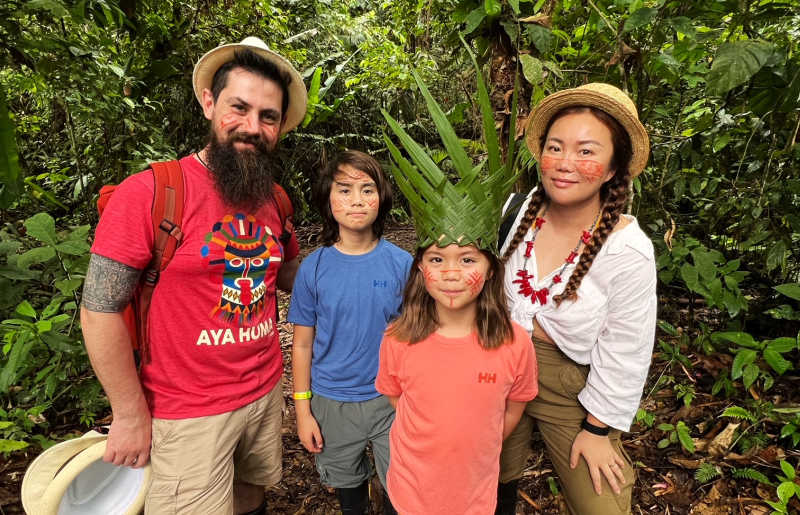
Families say they enjoy experiencing indigenous lifestyles in Ecuador’s Amazon
3. Getting there
There are currently no direct flights from the UK to either Ecuador or the Galapagos, so you will fly via either Europe or the States. Quito is the capital and main international flight hub. This is actually a bonus, as we encourage our families to explore the mainland, rather than treating it as just a stepping-stone to the islands.
Onward flights to the Galapagos are via either Quito or Guayaquil to the south of the country. They land at one of two airports, either Baltra (with a transfer to Santa Cruz Island) or San Cristobal Island.
Allow time for flight connections
Avoid an onward Galapagos flight within 24hours. One of our top planning tips is to avoid booking an international flight arrival and onward Galapagos flight on the same day. With potential long-haul delays, the risk isn’t worth it.
We also recommend spending a night on the mainland before your international flight home. Galapagos flights can occasionally be delayed, and you don’t want to end a wonderful holiday with unnecessary stress.
4. Why mainland Ecuador deserves a place on your itinerary
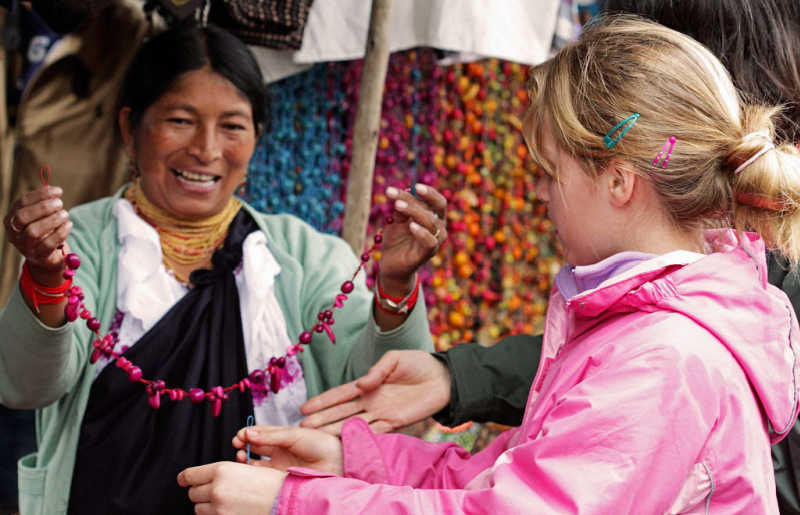
Otavalo’s indigenous market, near Quito, is a treasure trove for gifts and souvenirs
Ecuador is a wonderfully varied holiday destination for families in its own right. It packs cloud forests, colourful indigenous markets, colonial cities, the Amazon and the dramatic volcanic landscapes of the Andes into a surprisingly compact country.
The Galapagos may be the headline act, but mainland Ecuador deserves its own time in the spotlight, and combining the two makes the holiday infinitely richer. Having travelled extensively across Ecuador, both with and without children, my favourite family memories include:
- Creative workshops: Making dreamcatchers in an artisan studio in Otavalo
- High-altitude adventure: Hiking and horseback riding beneath Cotopaxi Volcano
- Jungle immersion: Enjoying a guitar session around the campfire deep in the Amazon.
- High-octane activities: Zip-lining and white-water rafting at Baños
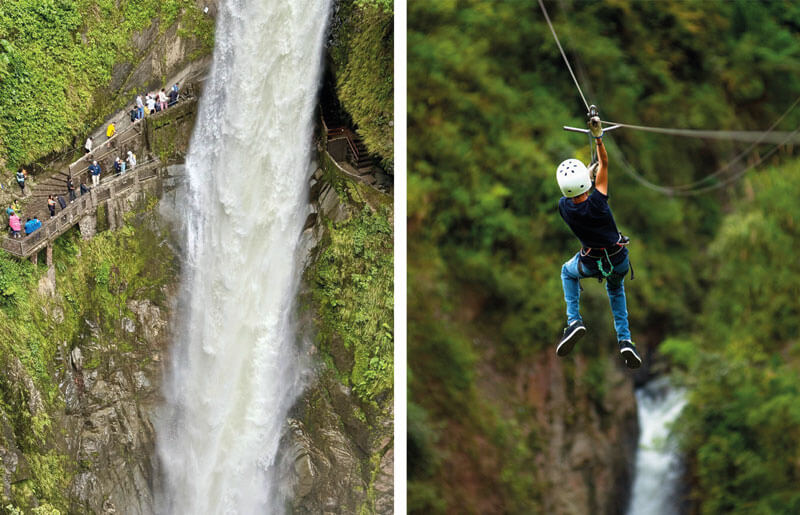
Baños is the place for tweens and teens who thrive on high-octane activities
5. The Galapagos Islands – cruise, island hopping or combine the two?
Choosing how to travel is usually the single biggest decision when planning a family trip to the Galapagos. With so many routes, vessel types and island combinations, it can quickly become overwhelming. This is where speaking with a team that knows the archipelago inside out and takes the time to understand how your family ticks makes all the difference.
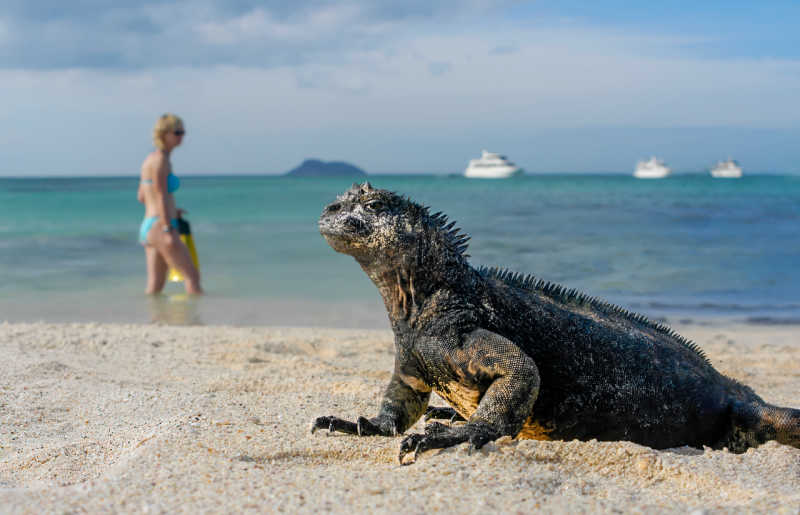
Each Galapagos island has a fascinating mix of wildlife, including endemic marine iguanas
Option 1: Wildlife cruise
Cruising (also known as liveaboard) is the most efficient way to reach more remote islands in the archipelago. Days are carefully organised around guided island visits, snorkelling excursions and coastal zodiac rides (small inflatable boats that can take you ashore).
- Best for: Active families with older children or teenagers (typically 8+), who do well with a structured schedule, love waking up somewhere new every morning, and want to see as much as they can.
- Vessel considerations: The cabins, family facilities, minimum ages and range of activities can vary considerably. Larger vessels (typically 40-100 passengers) typically offer interconnecting or triple cabins with more space to spread out and superior stabilisation for anyone prone to seasickness. Smaller boats can have a more intimate feel. But even on larger ships, landing parties are always kept small (capped at 16 people per naturalist guide), so island visits never feel crowded.
- Our family tip: Drawing from our own family trips and client feedback, a cruise of 4 to 5 days is usually the sweet spot for children. It allows you to visit remote wildlife hotspots without risking a feeling of ‘boat fatigue’.
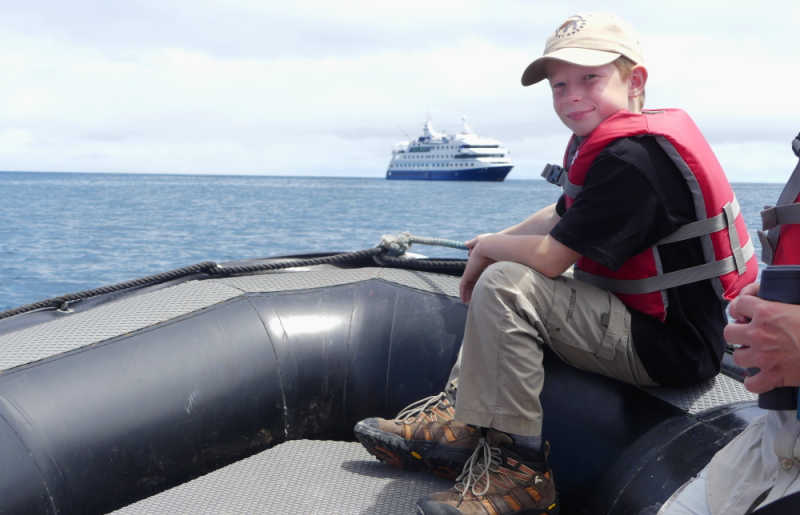
Zodiac landing boats take small groups from the cruise ship to the islands
Option 2: Island hopping (land-based)
If you prefer more flexibility with downtime, have younger children or want to sleep on firm ground each night, a land-based trip is a fantastic alternative.
The three inhabited islands of Isabela, Santa Cruz and San Cristobal each have their own character; all offer a choice of accommodation and activities. We’ll arrange guided day trips for you and boat excursions to neighbouring islands, always leaving room for slower afternoons on the beach or exploring the towns.
- Best for: Island hopping offers more choice of where to stay, the level of accommodation and how to spend your time. The trade-off is that travel between islands can eat into your day, as boat transfers can be up to two hours. Some of the remote islands are best reached on a cruise.
- Our family tip: On Santa Cruz, my 9-year-old son and I loved hanging out with the pelicans at the Puerto Ayora fish market and spotting land iguanas on the high street, before inevitably getting distracted by the souvenir stalls. It was a reminder that some of the best family moments can come when least expected, in between the headline highlights.
We’ll make sure that on longer trips we include some more free time, which we find can get forgotten on a busy Galapagos itinerary.
Option 3: Enjoy the best of both
If your time and budget allow, combining a shorter cruise with a few nights on land can give you the best of both approaches, access to remote wildlife sites and the freedom to explore at your own pace.
- Best for: Families who want a little of everything, although it isn’t essential to do both to have a memorable trip.
- Our family tip: Many cruises end on Santa Cruz Island which is the perfect place to spend a few additional days. However caution is needed not to duplicate any excursions you may have already experienced on the cruise. We will tailor your time here and offer different activities and visits to enhance your time in the Galapagos.
6. Getting between the islands
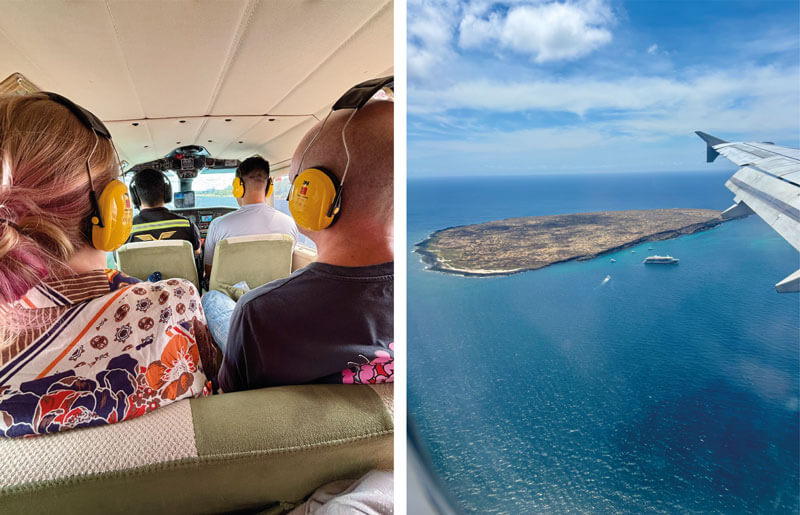
On a land-based trip, travel between islands by speedboat or inter-island small plane flights
Speedboats are a common way to travel between inhabited islands. Be aware that crossings can be bumpy and a little uncomfortable for anyone prone to seasickness.
Budget allowing, small inter-island aircraft offer a quicker, scenic alternative on certain routes, though luggage allowances and schedules need checking. My colleagues’ kids absolutely loved taking the small plane flights on a recent trip, as these not only cut down on travel time, but also give you an incredible scenic view over the islands.
We’ll help you weigh up the options rather than assuming that the cheapest or quickest choice is automatically the best one for your family.
7. Galapagos highlights: wildlife, water & wild landscapes
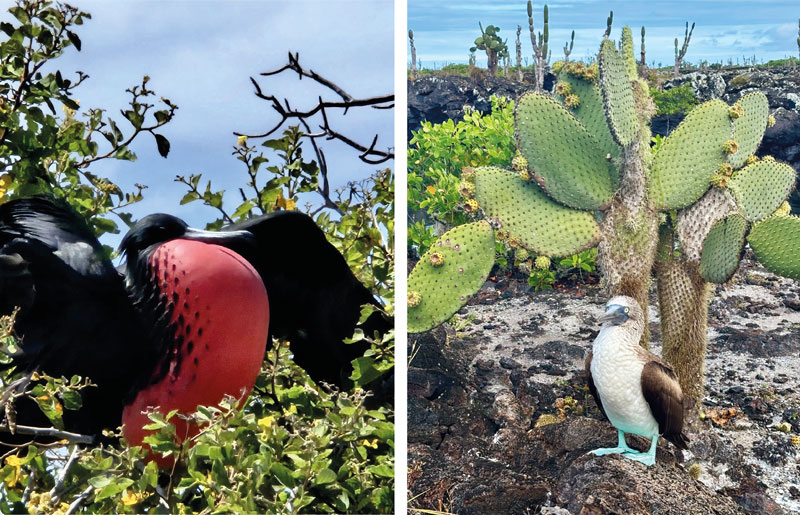
A magnificent frigate bird and a blue-footed boobie, snapped by a colleague on a recent trip
There is almost an absurd amount of wildlife to see here, including the Galapagos 15, which includes magnificent frigatebirds, blue-footed boobies, Galapagos penguins, land and marine iguanas, the iconic giant Galapagos tortoise and many more species on the more remote islands.
Rather than trying to tick off everything, allow time to enjoy the encounters as they happen. The Galapagos is extraordinary for families because the wildlife is often visible without spending hours searching for it. Sea lions lounge on harbour-side benches, marine iguanas bask on dark volcanic rocks, Sally Lightfoot crabs scuttle on the beach right in front of you and giant tortoises move slowly through the highlands.
Check out the Galapagos Conservation Trust for more on what to see on each island and find out about their conservation work. Remember that the wildlife is protected, and visitors must follow the rules on keeping their distance and behaving responsibly. The animals may seem unbothered by people, but they are wild creatures and need space.
Into the water: Snorkelling
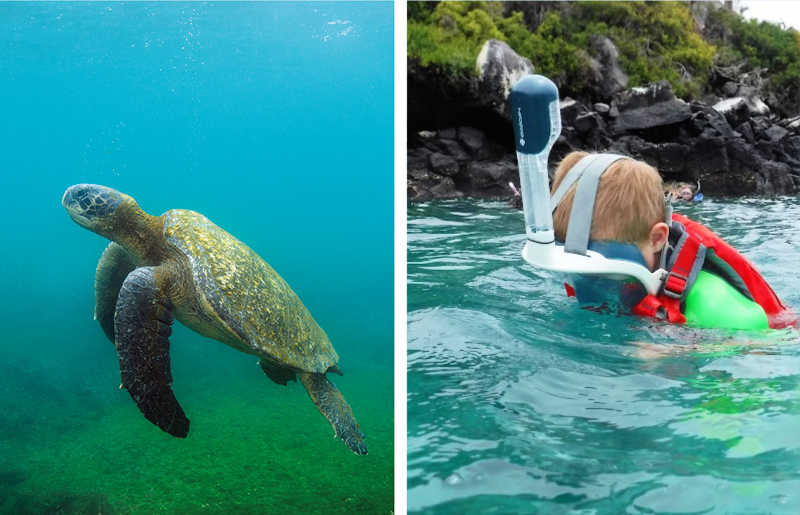
Snorkelling in the Galapagos was an absolute highlight for my 9-year-old
Snorkelling brings unforgettable encounters with green sea turtles, white-tip reef sharks, rays, colourful fish and marine iguanas. My son and I spent much of our trip in swimwear or shorty wetsuits, with salty hair becoming the daily norm. And we loved every minute! A waterproof dry bag quickly became an essential bit of kit for our day trips.
Snorkelling from a Zodiac or panga boat in open water can be challenging for inexperienced or nervous swimmers. We also always advise families to practice using a mask and snorkel in a local swimming pool before departing. It builds huge confidence before you arrive in the islands.
“The wildlife viewing was fantastic, both on the islands and while snorkelling. We got close to sea lions, sea turtles, penguins, marine iguanas, flightless cormorants, loads of fish, and a giant manta ray in the water, as well as iguanas and giant tortoises on land.” Dury Family travelling with children aged 15 and 18
Parent tip for non-swimmers: For younger children or less confident swimmers, we arrange fun alternatives like shallow beach wading, guided panga boat rides, or glass-bottomed boat excursions so no one misses out on the underwater magic.
On the water: Kayaking and boat trips
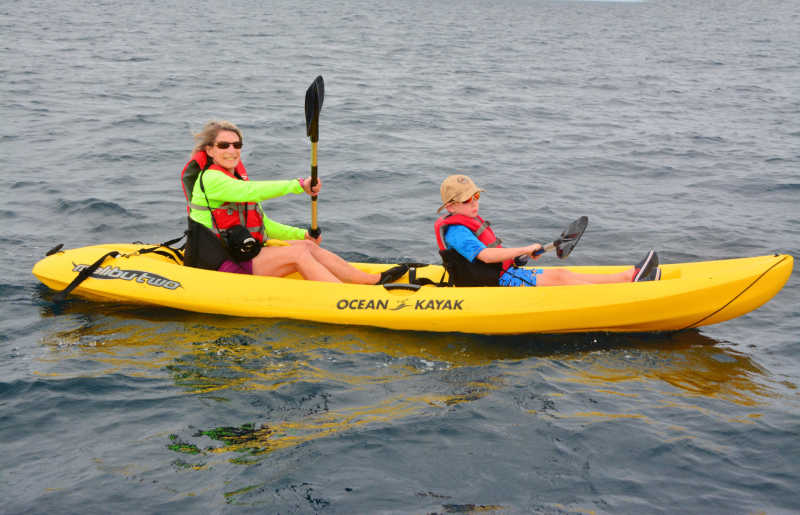
Double kayaks worked brilliantly for my family on our Galapagos trip
Kayaking and boat excursions offer wonderful ways to experience the marine environment for those who prefer staying above water.
- Double kayaks: Tandem kayaks work brilliantly for adults paddling with younger children or less confident swimmers.
- Glass-bottomed boats: Ideal for multi-generational groups, as grandparents and younger ones can comfortably see marine life whilst other family members are snorkelling.
Top kayaking tip: Don’t paddle too fast, and take frequent breaks. A calm boat with minimal splashing naturally lures inquisitive sea lion pups and turtles right up to your kayak!
My personal tip: Sometimes put your camera down and be in the moment! Our guides usually share footage, and I have to admit, their photos and videos are often better than mine!
Hike a live volcano: Sierra Negra (Isabela Island)
On Isabela Island, adventurous families can climb Sierra Negra (1,124m), a 5- to 6-hour round-trip trek. We managed to hike the entire distance, but families can ride horseback on the lower section, which some of our customers said their kids welcomed.
At the summit, you’ll find breathtaking views across the world’s second-largest volcanic caldera (over 6 miles wide), plus active thermal steam vents, fresh lava fields, and surrounding volcanic peaks.
- Best for: Active children aged 8+ (possible for younger children with riding support).
- Looking for more activity inspiration? Read our companion guide, Ecuador & Galapagos with Kids: Top 10 Unforgettable Experiences, for our favourite family-tested highlights.
Parent tip for hiking: One of the most iconic hikes is on Bartolomé Island, where a wooden boardwalk and staircase lead to a 360 panoramic view overlooking the iconic Pinnacle Rock. However, many walks on the Galapagos are on sharp volcanic rock, so suitably sturdy footwear is needed (take a small towel to dry your feet if a wet landing is involved).
Make time for doing very little; there’s a lot to take in
Galapagos itineraries are action-packed, particularly on liveaboard cruises where early morning landings, nature walks, boat transfers and snorkelling fill the days. There is an overwhelming amount of beauty to absorb.
Building in dedicated downtime, whether that’s an unhurried afternoon at Tortuga Bay, a lazy ice-cream walk along Puerto Ayora harbour, or pool time at your lodge, ensures kids stay energised and don’t suffer from travel fatigue.
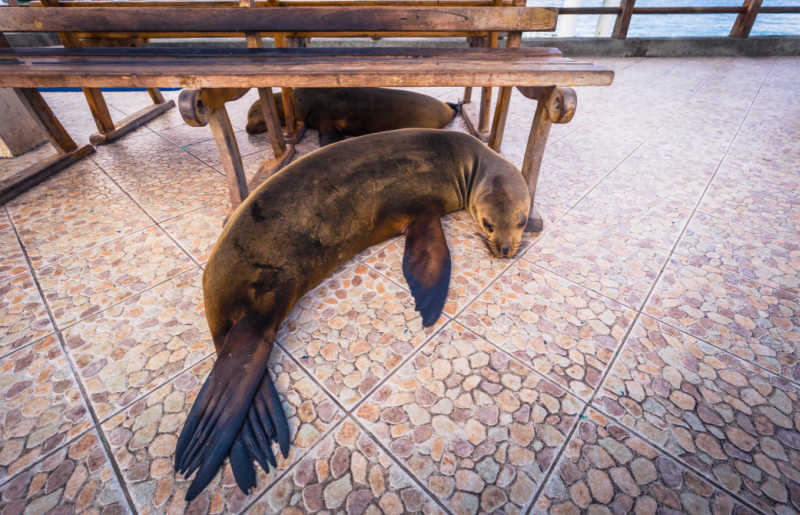
We loved spotting sea lions taking a nap in Puerto Ayora harbour on Santa Cruz Island
8. When to go to Ecuador & the Galapagos
Ecuador’s topography creates distinct climate zones over short distances. The Andean highlands can be chilly (especially at night), whereas the Amazon rainforest is warm and humid year-round. While the Galapagos Islands are a year-round destination, weather, sea conditions and wildlife activity vary by season:
Warm & Wet Season (December to May): Expect warmer sea temperatures (ideal for snorkelling without thick wetsuits), sunny skies punctuated by brief tropical showers, and calm seas. Perfect for UK Easter and Christmas holidays.
Cool & Dry Season (June to November): Driven by the Humboldt Current, bringing cooler ocean waters (richer in marine life like whales and dolphins), sea lion pup season, and nesting seabirds. Ideal for UK Summer school holidays.
Booking tip: Family-friendly interconnecting cabins and triple rooms on Galapagos cruises book up months in advance for UK school holidays. If you have fixed dates, we strongly recommend getting in touch early.
Check out our dedicated When to Go to Ecuador & Galapagos monthly guide for detailed wildlife calendars.
9. What to pack
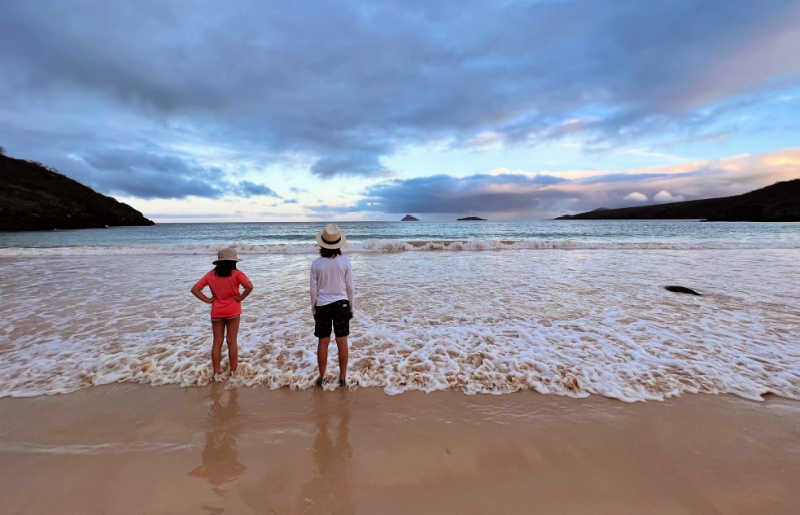
UPF rash vests and sun hats are must-haves in the Galapagos
Packing for three distinct microclimates in one trip is simple once you break it down by region:
For the Andean Highlands: Light layers for warm days, warm fleece layers for high-altitude evenings, sun protection (hat and high-factor sunscreen), and comfortable walking shoes.
For the Amazon Rainforest: Lightweight long sleeves and trousers (for insect protection), fast-drying shoes, strong insect repellent, binoculars, and airtight waterproof pouches for electronics.
For the Galapagos Islands: A waterproof dry bag for Zodiac boat landings, UPF rash vests, swimwear, fast-drying shorts, and well-fitting snorkelling gear for every family member. Wetsuits and snorkelling equipment are readily available to hire locally (and sometimes included on cruises).
Rest assured, we’ll provide you with a detailed packing list well ahead of time, with tips on what has worked for our own families and our customers.
10. Practical things to know
Entry requirements: Visas
British passport holders do not require a visa for tourist stays up to 90 days.
Galapagos Transit Control Card (TCT):
Mandatory card costing $20 per person.
Park fees:
Galapagos National Park Entrance Fee: Currently $200 per adult (aged 12+) and $100 per child (under 12).
Note: We’ll handle all guidance regarding online goods declarations and entry procedures before you travel to ensure a seamless arrival. The TCT and national park fees are often included in the cost of your trip; we will make sure this is clear in your quote.
Money and day-to-day spending
Mainland Ecuador and the Galapagos use the US Dollar ($). Cash is essential for small purchases, local markets, and tipping, although credit cards are accepted in major hotels and restaurants.
Local Ecuadorian centavo coins are used interchangeably with US cent coins for small change, but standard US dollar banknotes are used everywhere.
Food and culture
Ecuador is considered one of the more economical countries in Latin America, and eating out doesn’t need to break the family bank. Food includes delicious tropical fresh fruits, soups, grilled dishes and regional specialities, alongside familiar options such as pizza in many tourist areas.
Children who are cautious eaters should still be able to find things they enjoy, and trying something new can become part of the adventure. Many families say the cookery classes are a highlight and trying different food can become part of the adventure.
“As a group, the highlight for us was the cookery class with Claudia. She was such a warm and lovely host.” Suseelar Family with children aged 11 and 13
Ready to plan a family trip to Ecuador and the Galapagos?
Inspired to start planning your family’s Ecuador and Galapagos adventure? Get in touch to speak with one of our family travel specialists. We’ll shape every detail to match your family’s preferred pace and interests, taking care of all the logistics from start to finish.
Call us on 01728 752751 or fill out our quick online enquiry form to get started.
For other Latin America features, check out:
Ecuador & Galapagos with Kids
Guide to Family Travel in South America
Brazil with Kids – Top 10
Northern Argentina Highlights
Chile with Kids – Top 10
If you enjoyed our Ecuador & Galapagos family travel guide, please share it on social media. Thank you!
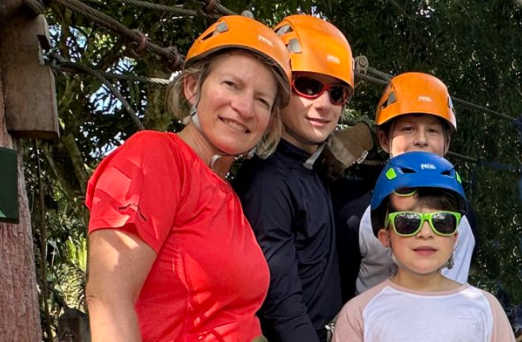
Helene in Belize
Helene Cooper,
Product Manager
at Stubborn Mule Travel, has spent decades exploring all seven continents
Helene is an enthusiastic expert on Latin America, having travelled extensively throughout South and Central America, from trekking the Inca Trail in the 90s to more recent trips with her own children. She is just back from a three-week trip to Peru, seeking out and testing new family-friendly activities.
Her experience includes:
- Travelling throughout Europe, North America and Latin America
- Exploring both Antarctica and the Arctic
- Visiting over 50 countries worldwide
- Building and maintaining relationships of the highest quality with Stubborn Mule’s in-country partners
- Personally designing holidays for more than 500 families
- Climbing Mt Kinabalu (Borneo) with her three children when aged between 5 and 8 years old
Helene’s enthusiasm for the region is renowned. Her passionate approach to crafting well-balanced family itineraries reflects the energy of Latin America. She is ‘Latina’ to the core!
